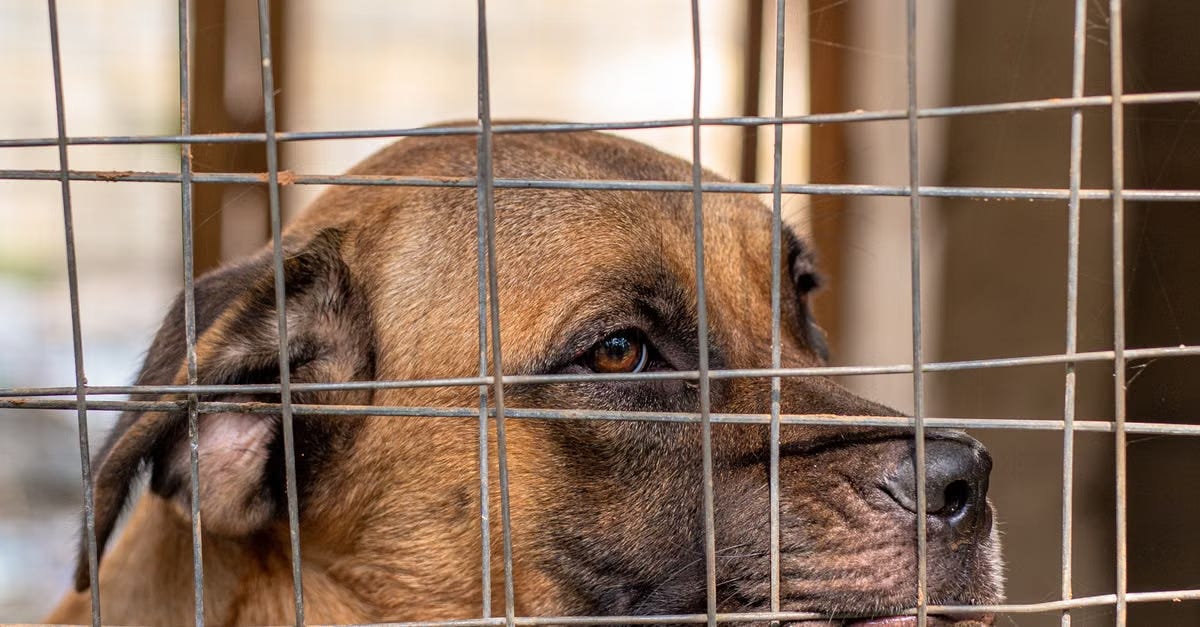
In other news: A somber anniversary. For dogs who have done nothing wrong, things have gone from bad to worse. New York City bans carriage horse rides. Do you have what it takes to save lives? First city outside of California bans glue traps. Legislation to ban public display of large marine mammals. Cruel bear baiting is set to become legal again. The federal government says it doesn’t have to protect dogs. Social service agencies are doing more for pets, but there is still a long way to go.
These are some of the stories making headlines in animal protection:
Those who are supposed to protect animals from abuse continue it

Earlier this week, I wrote a follow-up article about California’s new law allowing defendants to lose custody of animals seized in cruelty and neglect cases prior to conviction. Such a law is important:
Historically, these animals were held until the case was resolved, which often took months and in some cases years. Regressive pounds in California, and other states, refused to socialize or exercise the animals, leading to behavior and health issues. By the time the cases were resolved, pound directors simply killed the animals by falsely labeling them as “unadoptable,” even as they were culpable in the animal’s mental and physical deterioration.
As noted, the law provides an opportunity to spare abused animals continued suffering by getting them out of the shelter more quickly so that they do not languish for months and in some cases years. I wrote that while welcome, AB 2344 is not a guarantee of a better outcome: “While AB 2344 allows animals to be adopted or transferred to rescuers, it also allows California pounds to simply kill them, and I fear that is what many of them will do.”
I also noted that there is another reason for concern: pound directors and prosecutors may not do the work necessary under the bill to protect the animals. Historically, many of them haven’t, despite channels for getting these animals out that have existed for decades.
In response to that article, a former Los Angeles prosecutor shared his experiences, which tracked mine:
I’m the cofounder of the [Los Angeles] Animal Cruelty Task Force in 2000 and was possibly the first full time animal cruelty prosecutor. As part of the Task Force’s accomplishment of which I am most proud, I also implemented protocols that you referred to which insured that for almost 9 years virtually every case animal was fostered or adopted within weeks of filing charges. We didn’t have to wait for a conviction. That was using existing laws as you also mentioned.
It’s been horribly frustrating seeing those protocols abandoned by the LA City Attorney, DA [District Attorney] and Animal Services. What was even more frustrating was that the former “interim” GM of Animal Services had been in the Task Force and knew about the protocols. Yet she told the LA times and media they couldn’t release animals until a conviction. Thus the shelter had case animals languishing for years.
I’m glad for the new legislation but thanks for letting people know these protocols existed beforehand and it’s only because of the DA and LA City Attorney abandoning these procedures that countless abused animals suffered even after being impounded.
I responded to the LA Times report on this when the former GM lied and said there wasn’t anyway to release these animals until a conviction. I also changed policy so that case animals had the highest priority in finding new loving homes. Since retirement and that of my DA colleague… the system fell apart. [Paragraph breaks added for readability.]
As I wrote in my earlier article,
Recovery for animals seized because they have been subjected to cruelty should not have to depend on whether a prosecutor feels like filing a petition or whether a pound director feels like working with a rescue. The new law could be a meaningful step toward protecting these animals. But unless California addresses the implementation problem and eliminates killing as an option, it risks repeating a familiar failure: a system that has the legal tools to save animals but does not use them.
Tragically, it increasingly looks like that is the case.
A somber anniversary

This week marked the anniversary of PETA’s theft and killing of Maya, a family’s dog.
On October 18, 2014, two PETA representatives backed their van up to a home in Parksley, VA, and threw biscuits to Maya, who was sitting on her porch. They hoped to coax her off her property and allow PETA to claim she was a stray dog “at large” whom they could legally impound.
Maya refused to stay off the property and, after grabbing the biscuit, ran back to the safety of her porch. One of the PETA representatives went onto the property and took Maya. Within hours, Maya was dead, illegally killed with a lethal dose of poison.
A PETA spokesperson claimed Maya was killed by “mistake,” and defying credulity, explained that the same PETA representative who had earlier sat on the porch with Maya’s family talking to them about her care and who was filmed taking Maya from that same porch mistook her for a different dog. The “apology” was not only a devastating admission of guilt but evidence that killing healthy animals was business as usual for PETA employees — so commonplace that the only excuse PETA could offer for Maya’s death was that in taking her life, PETA officials had mistaken her for another healthy animal they had decided to kill. Was it likewise a “mistake” that five other animals from the same trailer park were killed by PETA and on the same day, too?
Lest anyone think PETA’s killing is ancient history, last year, PETA reported killing 938 cats. Another 179 were transferred, primarily to pounds that also kill animals. Historically, many of the kittens and cats PETA has taken to those pounds have been killed, often within minutes, despite being young (as young as six weeks old) and healthy. And despite millions of “animal-loving” supporters, a staff of hundreds, and annual revenues of over $85 million, PETA also admitted that they found homes for only 14 — an adoption rate of less than 1%.
It is not just cats who face oblivion at PETA. They also killed 719 dogs, while adopting out only 21. They killed 90% (18 out of 20) of rabbits and other small pets. They killed roughly half of all “farmed” animals and 76% of all wild animals.
And though PETA tells the media and the public that all the dogs, cats, and other animal companions they kill are suffering when criticized, they do not report that to the state. Only wild animals are listed as “critically injured/dying.” The cats are not. The dogs are not. The rabbits and other small animals are not. The chickens are not. And they are not listed as “critically injured/dying” because, if history is any guide, they weren’t.
For dogs who have done nothing wrong, things have gone from bad to worse