

“What is unconscionable, abominable and outrageous, is that animals, healthy and well-behaved, are being killed because someone says there are too many. That is something we do not accept. That is something we find intolerable.” — Richard Avanzino, 1997.
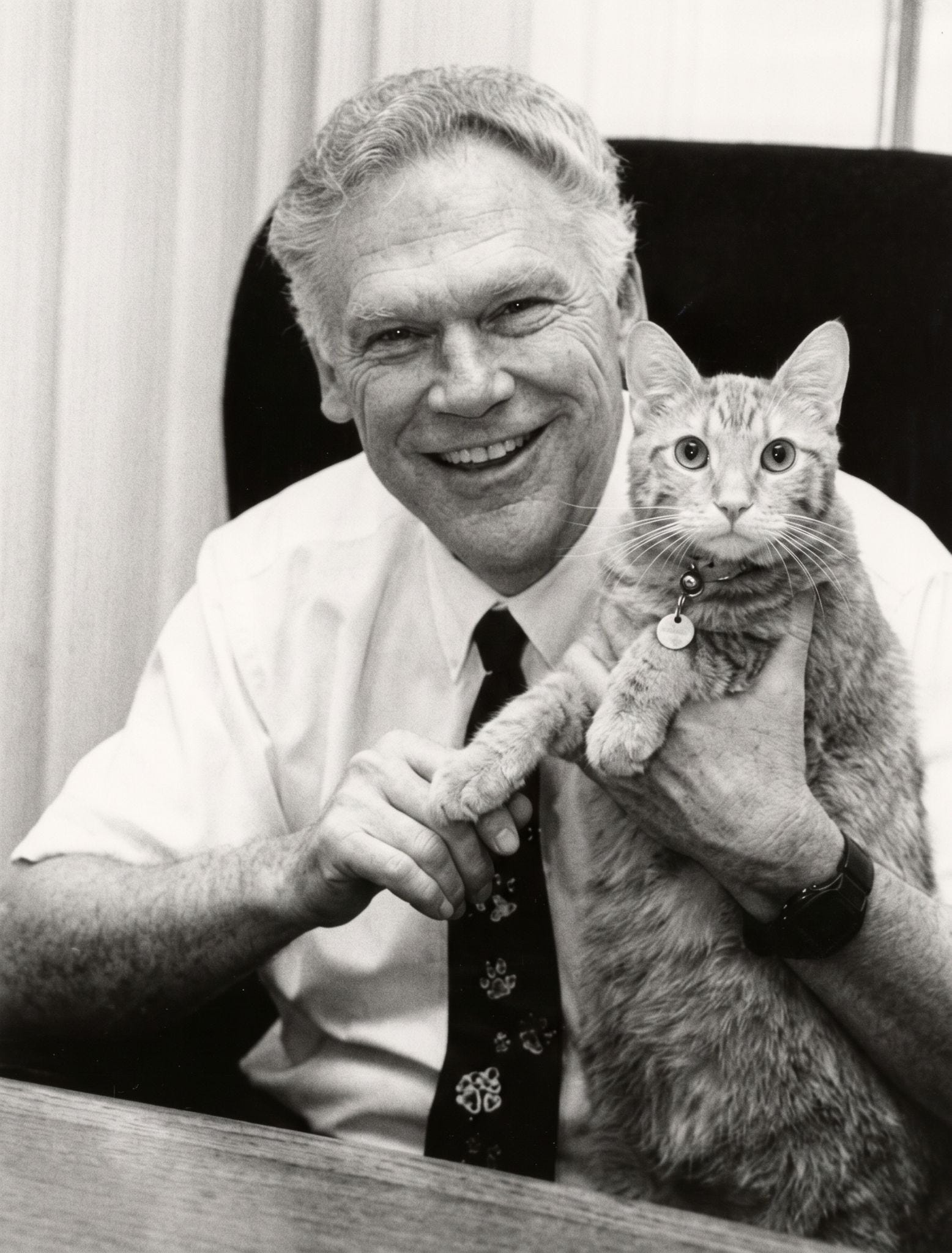
There are people whose lives can be measured in years, achievements, awards, or even the lives they touched. And then there are the rare people whose lives are better measured by the fact that the world would be very different but for their having lived. Rich Avanzino was one of those people.
Long before No Kill became a national movement, before shelter medicine became a recognized field, before foster care, offsite adoptions, behavior programs, low-cost sterilization, and adoption guarantees became familiar parts of the animal sheltering landscape, there was a man in San Francisco who looked at an institution built around killing animals and asked a deceptively simple question: What if we stopped?
I was fortunate enough to work for Rich Avanzino at the San Francisco SPCA. Eventually, I would take the model he created there to an open-admission animal control facility in New York, where we would build upon it and create the first No Kill community. Hundreds of communities thereafter did the same, bringing national pound kill rates to all-time lows — a 97% decline in killing. But before any of that happened, there was San Francisco, and there was Rich.
Animals are worth fighting for
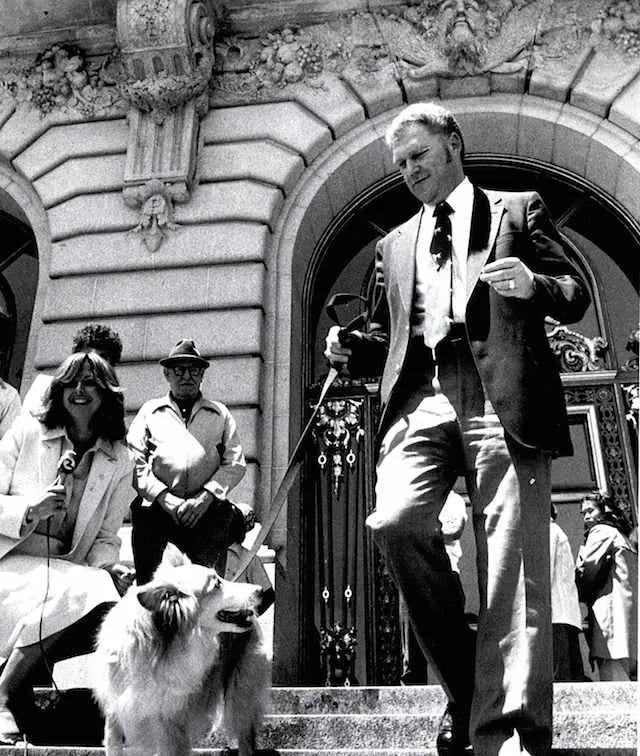
When Rich took over the San Francisco SPCA in 1976, humane societies and SPCAs across America had spent generations operating under a basic assumption: there were too many animals and not enough homes. The killing was treated as an unfortunate and immutable fact of life rather than a problem that could be solved.
The San Francisco SPCA itself had been caught in this deadly cycle for decades. An organization founded upon principles of justice, humanity, and mercy had become, like so many humane societies, an efficient mechanism for killing animals. By the time Rich was tapped to lead it, it was nearly bankrupt.
In 1979, however, a dog named Sido changed everything. This is how the San Francisco Chronicle described what happened next:
When Sido’s owner, San Francisco’s Mary Murphy, committed suicide in 1979, her will left strict instructions that Sido be taken to her veterinarian and “destroyed.” The will’s executor, Rebecca Wells Smith, said Murphy was afraid no one could take the right kind of care of her dog.
But Sido was in the care of the San Francisco SPCA, and its director, Richard Avanzino, saw things very differently. When Smith went to court to force the agency to have the dog killed, Avanzino refused, vowing that all the SPCA’s resources would be used to fight for her life.
“The law says a pet can be destroyed like a piece of furniture… We’re saying that’s wrong.”
Ultimately, Avanzino would succeed in court: the judge hearing the case ruled that “the right to dispose of property after death does not extend to killing a living creature.” He would also succeed in the state capital. At the 11th hour, the governor signed legislation prohibiting killing an animal in a will. He succeeded in helping establish the principle that allowing dogs to be killed just because a person with power over the dog demands it violated public policy. And he would succeed in marshaling public support for an overhaul of shelters. “I knew then the American people were ready for a transition,” he told the Chronicle. But if the American public was ready for a sea change in how shelters operated, the movement itself was not.
Rich presented his ideas at a national American Humane Association conference. He talked about increasing adoptions, using volunteers, expanding spay/neuter, and taking animals into the community. The audience was made up of pound directors, other shelter bureaucrats, and national animal welfare leaders. The prevailing attitude was that there was little anyone could do to change the fundamental fact of killing and little reason to try. As one critic described it, “Ownerless animals must be destroyed. It is as simple as that.”
They walked out.
Rich was undeterred.
Do good things for animals, tell people about it, ask for their help
It is difficult, all these years later, to appreciate just how radical he was. Today, many of the programs Rich pioneered seem obvious. Shelters should have foster programs. They should sterilize animals before adoption. They should provide behavioral assistance. They should make adoption convenient. They should partner with rescue groups. They should help people keep their animals when surrender can be prevented. They should make veterinary care accessible. They should be open when people actually have time to visit. They should sterilize, rather than kill, feral cats. But they weren’t then, anywhere — except in San Francisco.
These innovations combined to create the then-safest urban city for homeless dogs and cats in the United States, with a rate of killing that was a fraction of the national average and over 30 times less than communities with the highest death rates.
And at the heart of Avanzino’s new approach to sheltering was a revolutionary and unprecedented insight that stood in stark contrast to the status quo’s deadly misanthropy: that it was the people inside our shelters, not the animal-loving public, that held the welfare and status of animals in low regard. By creating shelters that reflected, rather than hindered, the American public’s humane values, Avanzino believed we could transform sheltering across the United States. While most “shelter” directors blamed the public for the killing, Avanzino saw people as the key to ending it.
It wasn’t so much that Avanzino changed hearts and minds. People already cared deeply about animals. He just made it easier for them to express that love. While most directors were intent on punishing people with public spectacles like killing dogs and cats on television or passing punitive legislation designed to wound, Avanzino stopped getting in people’s way. That became the central idea of his career: make it easy for people to do the right thing and they will.
He didn’t merely tell people to sterilize their pets; he lowered the price. He didn’t merely tell people to adopt; he took animals into their neighborhoods. He didn’t merely tell people to keep their animals; he built programs to help them overcome the problems that might lead to surrender. He didn’t merely ask volunteers to care; he gave them animals to foster. He didn’t merely demand that shelters become more humane; he built systems that made humane treatment the norm.
By the early 1990s, Rich had built the infrastructure. Next, he wanted a guarantee. The idea was audacious: a city law mandating that every healthy dog and cat entering San Francisco’s municipal shelter and thousands of sick and injured treatable animals who were not reclaimed or adopted would be transferred to the SPCA instead of being killed. The SPCA would take responsibility for finding each one a home. The city resisted. Neighboring shelters opposed the idea. National organizations argued against it. Rich took the fight public.
After months of pressure, negotiation, and the threat of a referendum, the Adoption Act became the Adoption Pact. Deaths of animals in San Francisco shelters dropped dramatically. Over the first five years of the pact, cat deaths declined by more than 70 percent, kitten deaths by more than 80 percent, and dog deaths by two-thirds. A city that had once killed the vast majority of the animals entering its shelters — what a local legislator described as a “blood bath” — became one of the safest major American cities for homeless dogs and cats.
Standing on the shoulders of a giant
As a young law student at Stanford, I would work for Rich Avanzino at the San Francisco SPCA, and the experience would ultimately become one of the defining chapters of my life. What I learned there was not simply how to operate a shelter. I learned that what we call “impossible” are sometimes things nobody has yet bothered to make happen.
When I eventually left San Francisco and took the approach Rich pioneered to an open-admission animal control facility in New York, the goal was no longer to move in the direction of No Kill using the model that Rich had pioneered, but to achieve it. We stopped asking whether a shelter could place all but irremediably suffering animals; we decided to do it. We stopped asking whether it was possible for an entire community to do so at an open-admission animal control shelter; we did it. Overnight.
The result was the first No Kill community, where animals were guaranteed a home regardless of whether they were young, old, sick, injured, unweaned, traumatized, or difficult to place. And it wasn’t limited to dogs and cats. Rabbits, hamsters, gerbils, and other sheltered animals were included as well.
The rest, as they say, is history.
Let there be light
There is a temptation, when somebody dies, to hide the warts in order to build a monument to their memory. That would be a grievous error. Rich came close but never achieved a No Kill community. His tenure is marked by other mishaps and missed opportunities. And when he left the San Francisco SPCA to run Maddie’s Fund, he left it in the care of someone decidedly not up to the task, and the former crown jewel of the No Kill movement predictably collapsed into mediocrity. Since then, it has betrayed its founding principles and become a danger to animals statewide.
At Maddie’s Fund, he forgot the primary principle that led to San Francisco’s success: fighting for animals and the public that loved them meant fighting those who run shelters and national organizations and are recklessly indifferent to the harm they cause. His desire for collaboration with them — also predictably — failed to achieve its stated goal of a No Kill nation. When Rich retired from Maddie’s Fund, and from the movement, he once again left the organization in the care of someone decidedly not up to the task. It, too, has become a danger to animals.
And so while his legacy was enormous, it was not a monument. Rich was all too human and, like the rest of us, subject to all the pedestrian flaws of human nature. But his legacy was about momentum: he began with the proposition that death was not a solution. He ended it by creating a world in which millions of animals left shelters alive. He did it by building programs that other people could use, creating ideas that other people could emulate, proving propositions that other people could test, and giving people permission to believe that their own communities were capable of better.
And while his successors and critics now question his focus on the “save rate,” as he called it, Rich knew numbers were a proxy for the thing that mattered most. Percentage points were living animals. It meant dogs and cats were not killed. Because once they are killed, these animals can no longer think and feel and run and play and eat and sleep and purr and bark. They are gone. Forever.
If we want to honor that legacy, we do it the way he did it in San Francisco: by fighting to give animals a right to live, a right to rescue, and a right to experience love. That is what I will continue to do, even if it means — as it unfortunately does — fighting the very organizations that Rich once helmed and those he partnered with.
For Rich was not just a man who changed my life. He was not just a man who changed the lives of millions of animals. Or a man who changed the course of American animal sheltering. He was a man who created a new world.
The penultimate line in Frank Capra’s masterwork “It’s a Wonderful Life” is when Clarence, the angel in search of wings, tells George Bailey: “You’ve been given a great gift, George: A chance to see what the world would be like without you.” A world without Rich having been in it would be, for animals, a very dark world indeed. That there is light is a testament to his having lived.
For that, we — and the animals — owe a tremendous debt of gratitude.
So, thank you, Rich. Thank you, very very much.

An amazing life and a lovely tribute, Nathan. I am sorry for your loss. I imagine he is surrounded by a pack of heavenly animals in a field of tall grass, basking in the sunshine, about now.
Thank you,MR, WINOGRAD! Well said! I too loved Mr. Avanzino! Rich being gone is a true irreplaceable loss to the protection of animals! I HAVE RECENTLY, EVEN THOUGH Rich was retired, I have had to contact him for help on California legislation. Jennifer Fearing, a corrupt lobbyist for Humane World for Animals (HSUS) has convinced SFSPCA and San Diego SPCA that she knowswhat she is doing. She is 100% WRONG in her actions. I have heard folks say she is really "cute." She also has a cleverly bloated resume. Cute and bloated aside, She tried to turn over the initiative I co-sponsored and co-directed, Prop.6 1998, that made horse slaughter a felony (and Prop.6 started the movement in other states and federally to do the same!) ThenJennifer Fearing and her partner in making money off of horses, Suzanne Roy, aka Stupid Hypocrite, next, Jennifer led the charge with Kitty Block and Wayne Pacelle to legalize cockfighting in California! THE LONGER TIME GOES BY, THE MORE OF THE ORIGINAL PURELY MOTIVATED INDIVIDUALS RETIRE OR DIE AND THE CON-ARTIST MONEY-MOTIVATED CRIMINAL TYPES TAKE OVER!
YOU and YOU and YOU must become the heros that you all are. Start now. Read legislation, not what you're told! Followthe facts, not what you're told! Believe your common sense, not what you're told. Love the animals and show it and rescue them yourself, because you know that is right. Richard Avanzino would do it that way.