

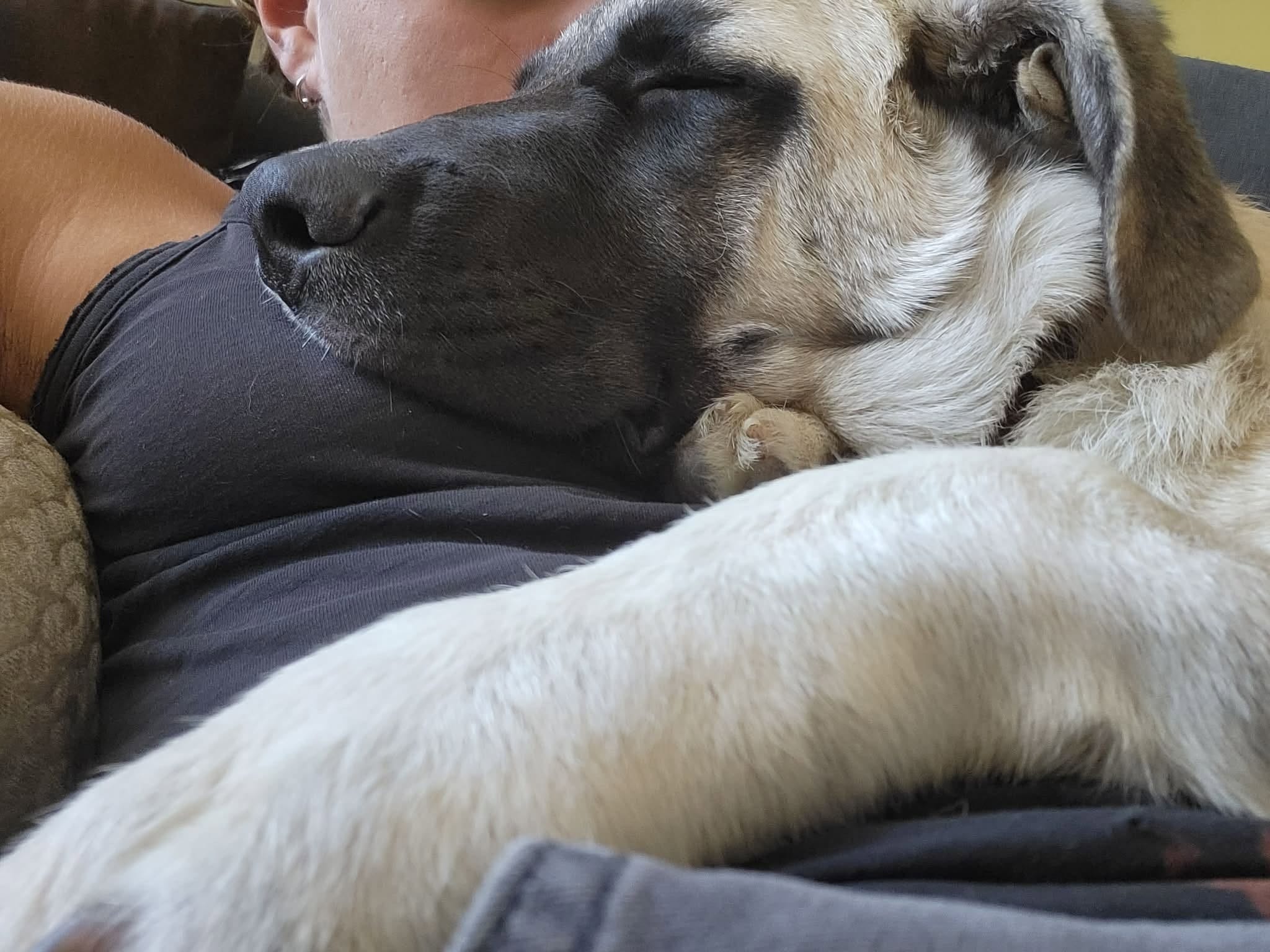
Bruce is dead.
On August 12, Ventura County Animal Services (VCAS) ended his life — just as his rescuers and legal team were actively seeking emergency relief from the United States Supreme Court. Only a day earlier, after a federal court lifted its protective order and the Ninth Circuit denied an appeal, VCAS informed counsel of its intent to proceed with Bruce’s execution.
Bruce’s attorneys immediately responded that they filed an emergency application with Justice Elena Kagan, the Circuit Justice for the Ninth Circuit, and expressly told VCAS that they expected the agency to refrain from killing Bruce until Justice Kagan had an opportunity to rule.
As previously reported, VCAS was sued to stop Bruce's execution after he was declared “vicious.” The destruction order followed several serious bite incidents that occurred when Bruce began acting out after his family became homeless. The Santa Paula Animal Rescue Center (SPARC), which originally placed Bruce with the family, filed suit arguing it retained contractual rights to the dog under their 2023 adoption agreement.
While VCAS relied on those bites to classify him as dangerous — arguing that “the physical and emotional impacts of those incidents” should not be “lost in the public discussion” — SPARC did not ask the government to ignore Bruce’s history. Instead, they offered a practical solution designed to address it: transferring Bruce to a sanctuary. VCAS, however, rejected it out of hand.
In doing so, government officials appeared to lose sight of the critical distinction between public safety as the objective and killing as the means. In other words, public safety is not an excuse to reject less destructive ways of achieving it. A dog can have a dangerous past and still live safely within a facility built to manage that past. Acknowledging this doesn't require pretending Bruce was harmless. But VCAS officials cannot pretend that a secure sanctuary option didn't fundamentally alter the equation.
What also appeared lost in the rush to kill Bruce — before all appeals were exhausted and non-lethal alternatives were considered at the highest levels of government — was his behavior during his six months in custody. VCAS’s own records described Bruce as a “model citizen.” He bonded with kennel staff, adapted well to a stable environment, ate treats from handlers’ hands, and recorded “no documented bite, attempted bite, charge, lunge, snap, or aggressive handling incident.”
That evidence did not erase what had happened before. It did, however, provide information about what was possible under controlled conditions. The issue, therefore, is not merely that a dog with a troubled history died; tragic and heartbreaking though that is. It is that the government was handed a viable alternative that protected human safety while preserving Bruce’s life, and chose to ignore it.
Even though the protective order was lifted, Ventura County officials should not have killed Bruce while the case continued to move through the federal appellate process and toward the Supreme Court. VCAS had a moral duty to wait until all remedies were exhausted — including the mere hours it would have taken for the Circuit Justice to review the emergency filing. Those hours never came.
VCAS chose to kill Bruce before Justice Kagan had an opportunity to rule. The County may have possessed legal authority to do so, but legal authority is not the same as necessity. Short of what I previously proposed — making it illegal for courts and government officials to kill dogs when viable, non-lethal alternatives exist — that is the question Bruce leaves behind:
When government possesses the power to end an animal’s life, and a credible alternative exists that can achieve the government’s legitimate purpose — public safety — without doing so, should the exercise of that power be judged solely by what the government is legally permitted to do? Or should it also be measured by what justice actually requires?
Bruce can no longer benefit from the answer. But other animals can.
Video courtesy of Facebook.com/ADogNamedBruce.
Nathan--could there be more direct evidence to prove your point about lazy journalism than the piece in the NY Times today about the petition to the Supreme Court. Somewhere the reporter and editor thought it irrelevant to let the readers know that the underlying biting incidents only took place when Bruce had no shelter of any kind. As a result, most of the comments to the NY Times were vitriolic about extremists supposedly worrying more about the life of a dog than the human victims. Lazy journalism indeed costs lives.
Thank you, Nathan, for this excellent summary of this tragic case. We here in Ventura County are devastated by the senseless killing of Bruce. The complete lack of response from county supervisors and shelter leadership to our emails, calls and pleas, was appalling. They had a chance to do something heroic; to preserve life while assuring that Bruce was never again put in a position where he could potentially harm humans. Instead they chose to kill.