In other news: The death of Happy. Another week, two new pet food recalls. An ethical and safer pet food alternative. Lions, tigers, bears, and kangaroos, oh my! More dogs rescued from an abusive research facility. Gaps between claiming to love animals and acting that way. Anxious dogs. TNR trumps trap and kill.
These are some of the stories making headlines in animal protection:
Spinning in circles
I am hearing rescuers and advocates regurgitating excuses for killing we debunked in the 1990s and 2000s: pet overpopulation, irresponsible public, need for a “no birth” and not No Kill nation. Two recent posts elicited these kinds of responses.
The first was about the Lynchburg Humane Society, in Virginia, demanding answers from the Danville Humane Society, that killed a dog named Eve. Eve was originally adopted from the Lynchburg shelter, but her adoptive family surrendered her to the Danville pound. The leadership of Lynchburg said Eve’s microchip was registered to their organization, criticized Danville staff for failing to contact them before killing her, and stated they would have taken her back immediately.
That Danville killed Eve is not surprising, as it has historically had among the highest killing rates in the state. In 2024, staff there killed nearly 70% of all dogs and over 70% of all cats. Staff also killed 45% of other animals, like rabbits. Its longtime director is a darling of the PETA pro-killing mindset, yet people still offered a litany of excuses.
The second was a post from The No Kill Advocacy Center regarding our vision for the future.
When we call for a No Kill nation, we are specifically referring to the promise and success of open-admission No Kill Equation sheltering. We are referring to a shelter in the dictionary sense of the word: “an establishment providing food, protection from danger, and temporary housing for stray or unwanted animals.” The door is always open and animals find a new beginning, instead of the end of the line.
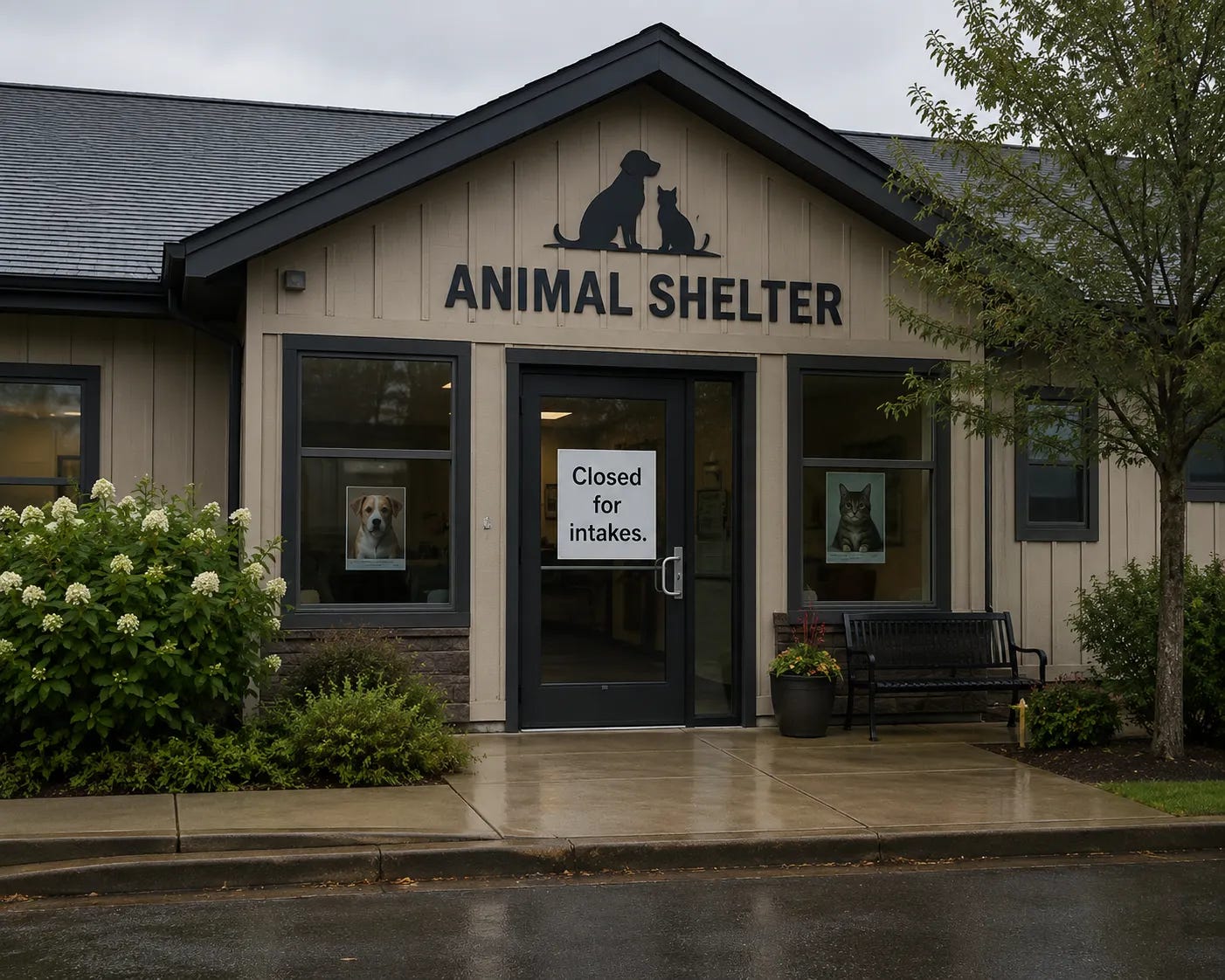
We are NOT referring to the fundraising scam where “managed intake,” “community sheltering,” and “Human Animal Support Services” are euphemisms for “no entry” and increases in placement rates are dependent on animals being turned away, abandoned, and left to suffer.
If the goal of a No Kill nation is to truly mean something, we must stay rooted in reality: a placement rate cannot be considered ethical if it comes at the cost of abandoning the very animals shelter staff are responsible for protecting. These animals do not cease to exist simply because municipal shelters fail to count them. They are still suffering, still dying, and their lives still matter.
Once again, some of the responses bordered on killing apologia. Why? People are seeing more stray animals and rescuers, trying to do the job shelters are refusing to do, are not only more overwhelmed than they have been in years, but many are on the verge of financial collapse.
And so they reason backward and blame the irresponsible public, too many animals, and lack of spay/neuter, rather than the real culprit: there are more stray animals today not because of a population surge, but because inept, uncaring pound directors and lazy and unaccountable staff are turning away many animals and telling people who find them to leave them or abandon them to the streets.
Meanwhile, national organizations, like Best Friends, Austin Pets Alive, and those associated with them — including many former No Kill advocates — prop them up, legitimize them, and provide them political cover with euphemisms like “managed care,” “community sheltering,” and “Human Animal Support Services.”
We need to stop offering excuses, as there is no “need” to kill animals. There are plenty of homes available, with demand for animals nationwide outstripping shelter “supply” more than ten-fold. Using the most successful adoption communities as a benchmark and adjusting for population, U.S. shelters combined should be adopting almost nine million animals a year. That is roughly nine times the number being killed for lack of a home. In fact, it is more than total impounds, and of those, almost half do not need a new home. And the 95% decline in pound killing, before the movement was derailed by Best Friends and Austin Pets Alive with their scam “community sheltering” initiative, proves it.
Learn more: Ghost Animals.
The death of Happy